

Bathroom Accessories Materials Comparison: A Practical Guide for OEM & Wholesale Buyers
Choosing the right materials is a critical step when sourcing bathroom accessories for residential or commercial projects. A clear bathroom accessories materials comparison helps buyers balance durability, aesthetics, maintenance, and cost—especially when working with a professional bathroom hardware OEM supplier. Different materials perform very differently in humid environments, and the wrong choice can lead to corrosion, discoloration, or premature replacement.
This guide compares the most commonly used materials in bathroom accessories, offering practical insights for distributors, project buyers, and private-label brands.
Common Materials Used in Bathroom Accessories
When conducting a bathroom accessories materials comparison, several materials dominate the market due to their performance and manufacturing feasibility.
Stainless steel is widely used for towel bars, soap dispensers, and shelves because of its strong corrosion resistance and clean appearance. Grades such as 304 stainless steel perform especially well in high-humidity bathrooms.
Brass, often finished with chrome, nickel, or PVD coatings, is valued for its weight and premium feel. It is frequently chosen for upscale bathroom accessory lines, although it requires surface protection to prevent oxidation.
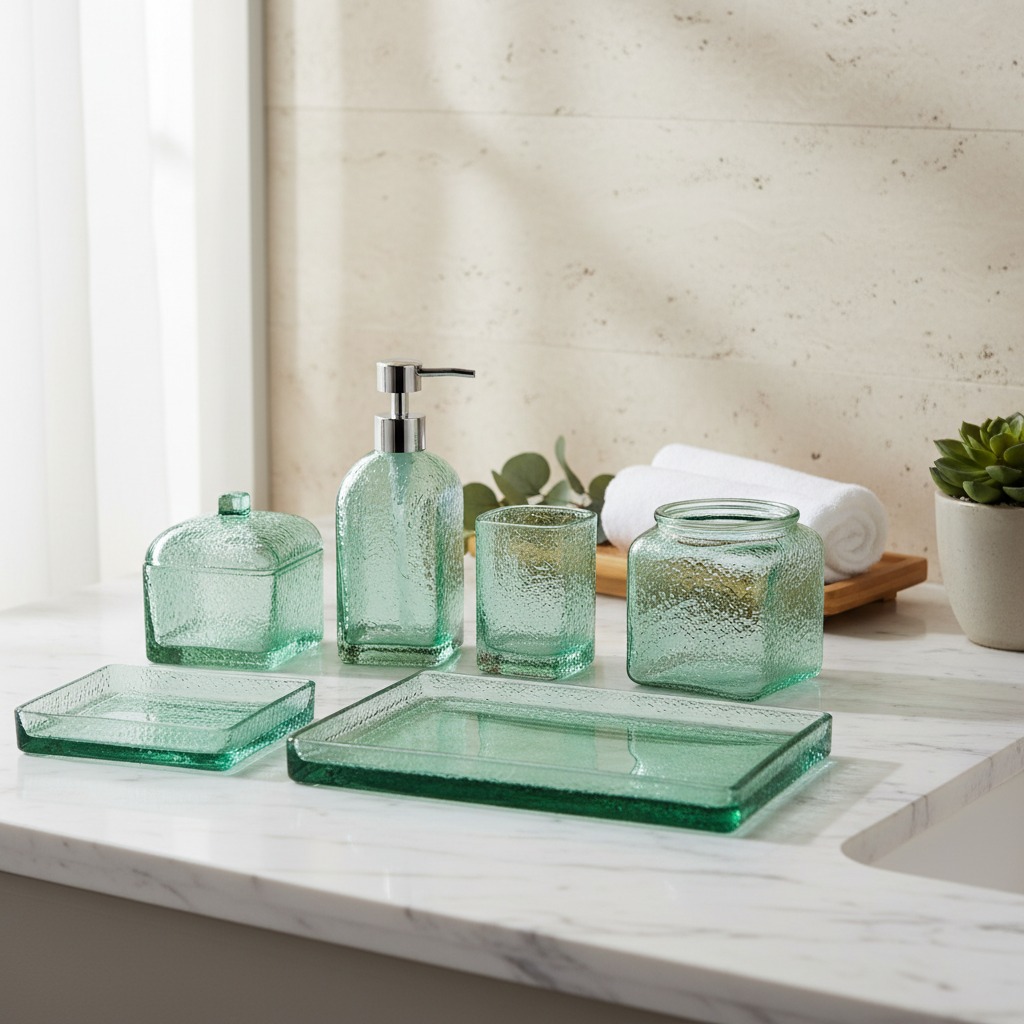
Glass, particularly tempered or textured glass, is commonly used in tumblers, soap dispensers, and trays. It adds a modern and hygienic appearance, making it popular in contemporary bathroom designs.
Plastic materials, such as ABS or acrylic, offer cost advantages and design flexibility. High-quality plastics are lightweight, impact-resistant, and suitable for large-volume wholesale projects.
Ceramic accessories provide a classic and natural look. They are often used for countertop items and are appreciated for their heat resistance and smooth surface finish.
Each material offers different benefits depending on usage conditions, budget, and design positioning.
Metal Materials: Strength and Long-Term Durability
Metal remains the most reliable option in a bathroom accessories materials comparison, particularly for wall-mounted hardware.
Stainless steel is favored by many bathroom hardware OEM suppliers because it resists rust, handles frequent cleaning well, and maintains its appearance over time. It is ideal for hotels, apartments, and commercial bathrooms where durability is essential.
Brass accessories offer excellent structural strength and a solid feel, which appeals to premium markets. However, they are heavier and more expensive than stainless steel, and surface treatments play a key role in long-term performance.
Zinc alloy (zamak) is another commonly used material in OEM manufacturing. It allows for complex shapes and smooth finishes at a lower cost, making it suitable for mid-range bathroom accessory collections.
Glass: Modern Design with Hygienic Benefits
Glass stands out in any bathroom accessories materials comparison due to its visual appeal and hygiene advantages. Non-porous surfaces prevent bacteria buildup and make cleaning easier, which is especially important for countertop accessories.
Textured or frosted glass adds depth and diffuses light, creating a spa-like atmosphere. Tempered glass improves safety and durability, reducing the risk of breakage during daily use.
Many bathroom hardware OEM suppliers combine glass with metal bases to enhance stability while maintaining a refined look. This hybrid approach is popular in modern bathroom accessory sets.
Plastic and Ceramic: Cost-Effective and Design-Flexible Options
Plastic and ceramic materials play an important role in bathroom accessories materials comparison, particularly for budget-conscious or high-volume buyers.
High-quality plastics are lightweight, shatter-resistant, and available in a wide range of colors and finishes. They are suitable for family bathrooms, rental properties, and large wholesale orders where cost control is important.
Ceramic accessories offer a more artisanal and natural aesthetic. They are resistant to heat and staining, but their weight and fragility require careful packaging and installation. Many buyers choose ceramic for countertop items where visual appeal is a priority.
Durability, Maintenance, and Environmental Factors
Durability is one of the most important factors in bathroom accessories materials comparison. Bathrooms are exposed to moisture, temperature changes, and frequent cleaning.
Stainless steel and glass generally require the least maintenance, while polished finishes may show water spots or fingerprints. Brushed or matte finishes help reduce visible wear.
From an OEM perspective, reputable bathroom hardware OEM suppliers conduct corrosion resistance and salt spray testing to ensure products perform well in coastal or high-humidity regions.
Sustainability is also becoming a key consideration. Recycled metals, lead-free glass, and eco-friendly packaging are increasingly requested by international buyers.
Aesthetic and Functional Integration
Material choice directly impacts how bathroom accessories integrate with overall interior design. Matte metals and clear glass suit modern spaces, while ceramic and warm metal tones complement traditional or minimalist styles.
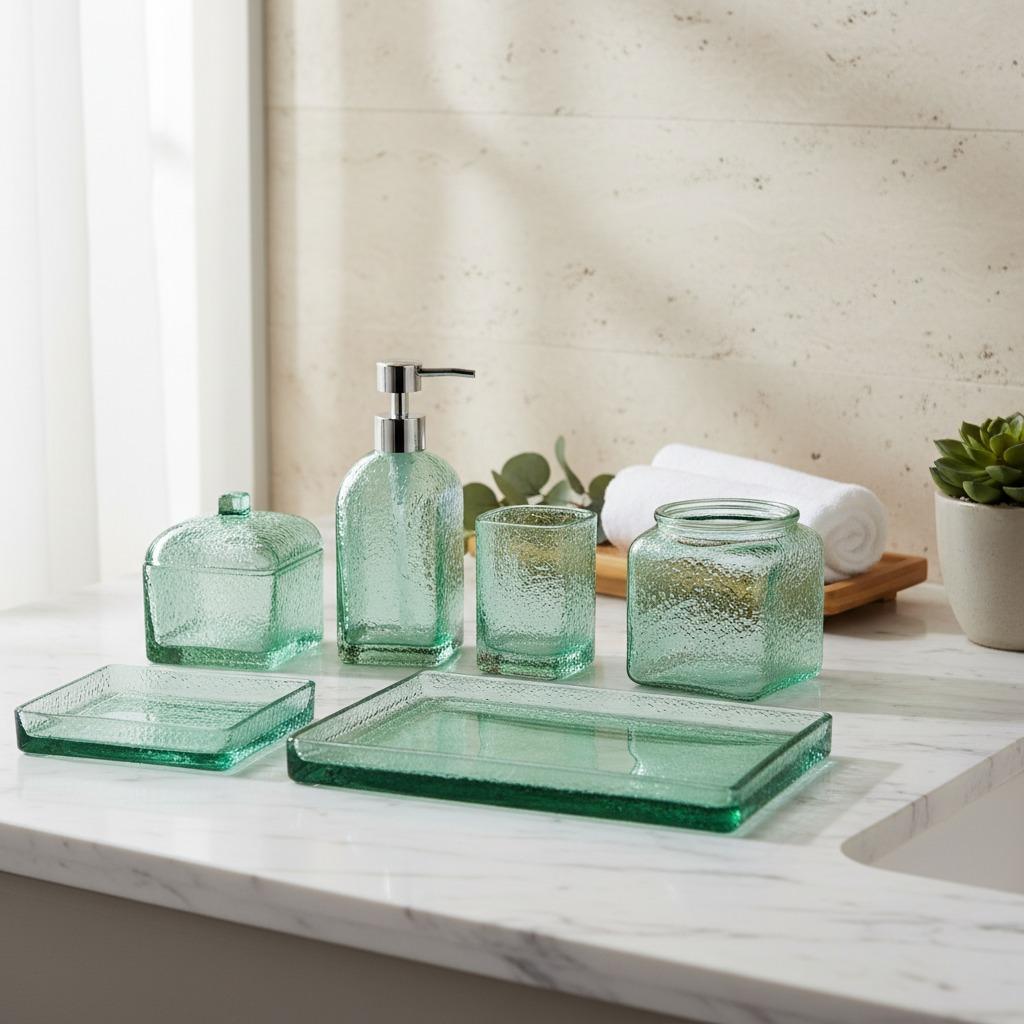
Functionality should never be overlooked. Accessories must feel solid, dispense smoothly, and remain stable during daily use. For example, a well-designed glass bathroom accessory set with textured surfaces can combine elegance with practical usability, enhancing both appearance and organization.
Cost Comparison and Wholesale Considerations
Cost varies significantly across materials in any bathroom accessories materials comparison. Plastic accessories are the most economical, while brass and premium glass sets sit at the higher end.
Working directly with a bathroom hardware OEM supplier allows buyers to control costs through material selection, finish options, and bulk production. Although premium materials require higher upfront investment, their longer lifespan often reduces long-term replacement costs.
Choosing the Right Material for Your Project
The best choice depends on your target market, usage environment, and budget. High-traffic bathrooms benefit from stainless steel and tempered glass, while decorative or residential spaces may prioritize design over maximum durability.
Consulting an experienced bathroom hardware OEM supplier helps ensure the selected materials meet performance standards while aligning with branding and market expectations.
A well-informed bathroom accessories materials comparison leads to smarter sourcing decisions and products that deliver lasting value.